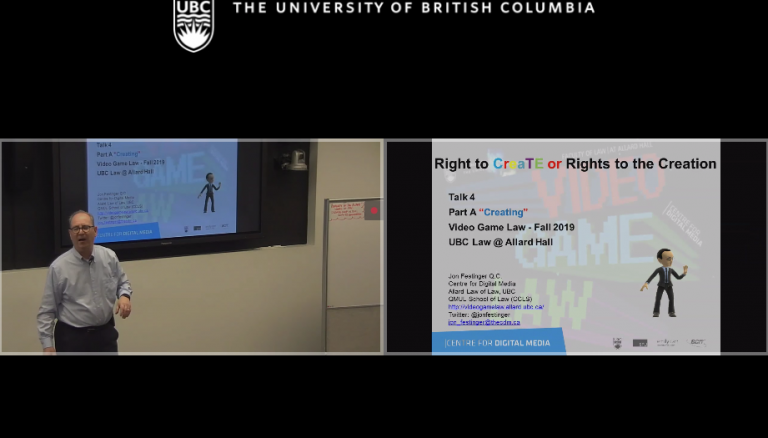
Video & slides above.
Jon
Video & slides above.
Jon
This is a reply to the question I received during the presentation. I described the art of Chinese games as “colorful, crowded and shiny ” but I think with a picture it would make more sense. So here is a screenshot by someone else of MMORPG mobile game Fantasy Western World Journey developed by NetEase:
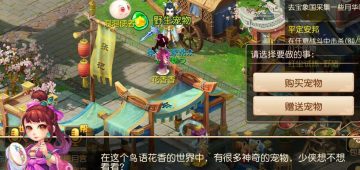
In comparison, I would describe the art of US games as “cool” and Japanese ones as “cute and tidy”. Let me know if that’s a kind of misunderstanding.
I also want to include a picture of the marketplace (where you pay for in-game items in a F2P game) of Tencent’s King of Hornor. Look at all the columns on the left you will find a variety of things to buy and its super complex:

Let me know if you have further questions on today’s topic!

Pretty big news from France:
Four years after the French consumer protection association “Union Fédérale des Consommateurs (UFC) – Que Choisir” filled a lawsuit against Valve’s Steam on the basis of a clause in its store policy that disallows the resell of games or Steam accounts, on penalty of being banned from the platform. The District Court in Paris has now announced a decision: Steam may not prohibit users from reselling their games.
At the moment, the terms of use of Valve’s distribution platform explicitly state that users do not have permission to “distribute or transfer contractual content and services (games, updates, etc.) to third parties”.
According to the French court, however, this is an infringement of two fundamental principles of the European Union:
According to the judgement, Steam is now theoretically forced to change its terms of use and make this change visible on its homepage for 3 months. Valve has been given one month to comply with these requirements. If not, they will have to pay a penalty of 3,000 € for each additional day.
Valve certainly plans to appeal against this decision. However, a final decision could be very important for the entire gaming industry.Such a drastic decision regarding digital sales would not only affect Valve, but many distribution platforms for PC or console products.
The outcome of this dispute can therefore be awaited with great interest.
Links for further information:
https://www.polygon.com/2019/9/19/20874384/french-court-steam-valve-used-games-eu-law
Andrija
Have you ever stopped to think about the carbon emissions of the cars you race in GTA? Ever thought about whether your Sim’s shower is water efficient or whether you should really cut that tree down in Minecraft? Some of us might not think about these things in our real lives, let alone our virtual ones, but you’re about to.
As the global climate strikes continue, today at the UN Headquarters some of the biggest names in the video games industry have formally committed to using their platforms to take action against the climate crisis. The “Playing for the Planet Alliance” saw leaders in the gaming industry including Sony Interactive Entertainment, Microsoft, Google Stadia, Rovio, Supercell, Sybo, Ubisoft and WildWorks, commit to tackling climate change.
While many of their commitments include reducing the carbon effect of actually playing their games (mostly around power consumption) many of them have focused on using their video games as a possible way to educate people about climate change. Many of the companies will host design-jams with their creatives to consider how they can “mindfully incentivise better environmental outcomes” within the games, without limiting the fun and enjoyment for players. This is consistent with the upwards trend we are seeing in video games, like Eco, that focus their story line on saving the world from man-made climate disaster. While this might seem like new ground, some of these games have been around for 10 years.
I am personally very interested to see the user reaction to environmentally friendly cues in decision-making games, and whether the response will reflect the real-world opinions on climate change. I am also interested in whether an almost forced sustainability in video games will have any consumer effect and change people’s behaviour outside the game.
How do you feel about having a story line driven by reducing pollution? Do you like that you can be environmentally friendly while playing video games or does this feel like big corporate pushing an agenda?
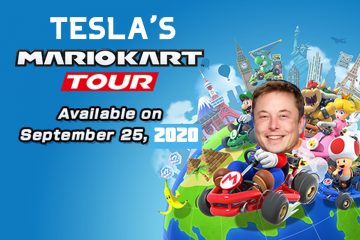
Many video games put the player on a hero quest to save the world. Maybe this time next year when I play Mario Kart I’ll be racing a Tesla.
GAMES
DIGITAL
A.I.
COMMUNICATIONS
PRIVACY
CREATIVITY
Jon
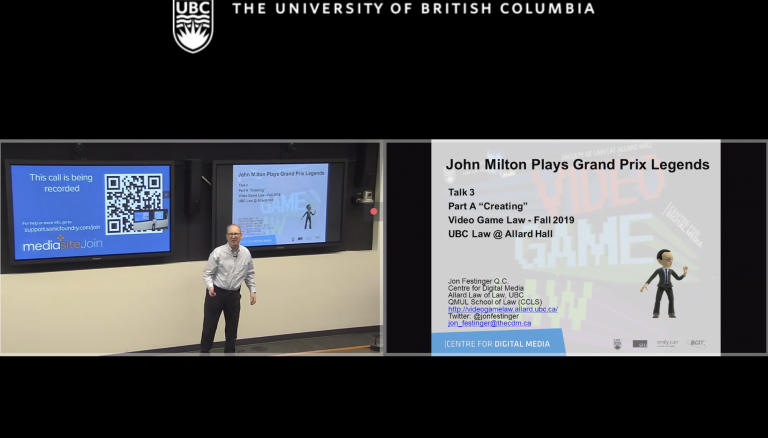
Video & slides above. Note that in Brian and Perry’s slides the videos are disabled as they were way too large to upload.
Jon

I wanted to post about the influence music has on the gaming world.
Growing up I loved video games, especially sports games (NHL, NBA & FIFA) and the soundtrack in sports games are so influential on the gamers. I can honestly say that there are songs from NHL 2002 onwards that I could recite word for word if I heard it but I did not know the name of the song (She Loves Me Not – Papa Roach from NHL 03).
FIFA on the other hand is probably the biggest and most global sports game in the gaming industry. I feel like the songs in these games reach global audiences. EA has bought into this global audience and announced that the game will feature many international artists that will please players globally:
“The 43-song soundtrack features marquee names like UK grime icon Skepta; American neo-soul hitmaker BJ The Chicago Kid; Spanish vocalists – and VMA showstoppers – ROSALÍA & Ozuna; Israeli singer/songwriter Dennis Lloyd; hot Philly female rapper Tierra Whack; London indie rockers Another Sky; DC breakout rapper GoldLink; Norwegian R&B stars Fieh; Brooklyn singer-songwriter Cautious Clay; UK rock favorites Foals; Australian electropop star Flume; Florida rapper/singer Dominic Fike; UK hip-hop musician and Mercury Prize nominee Loyle Carner; and The S.L.P., the solo project of Serge Pissorno from Kasabian featuring London rapper/singer Little Simz”
I always found soundtracks to be very interesting in games and are usually overlooked in the gaming industry, but the soundtrack and music in the games can be under a lot of scrutiny f0r such things like copyright, royalties and like it was stated in this article:
“Not obtaining proper consent from copyright owners can be an expensive mistake to make. Unauthorised use in a game of a composition or a recording of a composition is an infringement of copyright law. An aggrieved copyright owner might initiate an action against you, which, if successful, can lead to a claim for substantial damages or a share of the game’s profits ” (https://www.mcvuk.com/the-legal-side-of-music-in-games/)
In a game like FIFA, its interesting to think how all those copyright laws in the respective country plays into the domestic sales in other countries. Example, how the copyright law of UK allows FIFA to be sold in Canada, where you can listen to UK Grime icon Skepta. How do royalties work across all these markets? It’s interesting, I will continue to search for these articles and update this as they come available.
FOLLOW THESE LINKS FOR MORE INFORMATION:
https://www.forbes.com/sites/brianmazique/2019/07/20/nba-2k20-soundtrack-announced-along-with-new-talent-search-initiative-for-new-artists/#4874fea26fcd
https://www.ea.com/games/fifa/fifa-20/news/fifa-20-soundtrack-volta-football
operationsports.com/nhl-20-soundtrack-revealed/



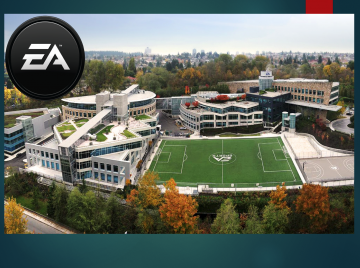
Happy to report that Brian Dartnell (left) and Perry Bahniwal (right) of the Legal Department of Electronic Arts will be joining us tomorrow to provide some insights into the issues video game company counsel deal with day-to-day.
Brian is Vice President, Legal Affairs at EA. He has been at EA almost 14 years, working out of EA’s Vancouver operations. Prior to joining EA Brian practiced at both Owen, Bird and Gowlings and clerked and the B.C. Court of Appeal. He graduated from Osgoode Hall Law in 1996.
Perry is Product Counsel at EA having joined in April 2018. Before that he was legal Counsel at Canucks Sports & Entertainment, Global Relay, Central 1 Credit Union and Broadband TV. Perry articled at Stikeman Elliott, obtained his law degree from the University of Southhampton in 2007 and is currently the President of the BC Chapter of the Association of Corporate Counsel.
Jon
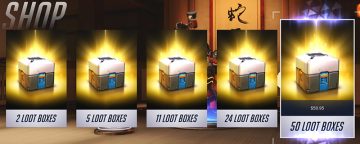
Gambling in Video Games – Loot Boxes
There is news regarding the dealing with Loot Boxes in Video Games. A few days ago the UK MP stated that in their opinion the use of Loot Boxes should be banned for children and that Loot Boxes are gambling and should be regulated according to the UK Gambling Act.
What are Loot Boxes?
A Loot Box is a virtual box in Computer Games that contains a random collection of certain items, such as weapons, ammunition or other special items. Loot boxes can be unlocked, found or purchased in-game. The purchase is made either in player currency or in real money.
Since the purchase of Loot Boxes usually gives the player an advantage, they are often purchased.
Criticism and Problems of the Loot-Box-Systems
The purchase of Loot Boxes involves two major problems:
1) The use of Loot Boxes is often criticized for pushing so-called “pay-to-win systems”. These are free-to-play games, which are basically played without any additional real money, but cost a lot of time, are very difficult to win with free money or offer a disadvantage in competition. Sometimes the providers go so far that essential items can only be offered for real money. In this case, the term “pay-to-win” is clearly used.
Therefore the purchase of Loot Boxes offers in most cases an unlawful advantage to the other players.
2) Because of the natural competitive spirit of the gamers, the players always try to be better than their opponents. By buying Loot Boxes it is possible to gain an advantage over opponents who have not bought a Loot Box. This may increase the need for some players to buy more and more. Critics talk about a considerable risk of addiction and compare the Loot Box system with gambling.
In one case, the UK Committee heard that a player had spent up to 1000 pounds per year on Loot Box mechanisms in EA FIFA.
In another case, a player’s parents came forward and reported that their adult son had incurred debts of 50,000 pounds through microtransactions in the online game RuneScape. The game’s developer, Jagex, reported to the committee that players could potentially spend up to £1,000 a week or £5,000 a month.
Global Comparison of Loot-Box-Regulations
a) Netherlands and Belgium
Especially in the year 2018 there were court decisions, which stated that some, but not all Loot Boxes violate the existing gambling laws.
EA deny the judgments and wants to proceed with the sale of Loot Boxes. However, the Belgian public prosecutor started an official investigation to investigate whether EA was involved in illegal activities.
2K has informed customers that in the future, optimisations could be made for real money purchases within the NBA 2K game to ensure compliance with legal requirements.
Blizzard has decided to eliminate the possibility of buying Loot Boxes with real money for some games in order to meet the requirements.
b) China and South Korea
In China and South Korea, it is already mandatory for any video game developer who sells Loot Boxes in their games to reveal the percentage chance of receiving a reward. China also passed a tough regulation in 2017 prohibiting the sale of virtual lottery tickets.
c) Australia
A 2018 study found that Loot Boxing is psychologically similar to gambling, especially among young people. The study recommends that games with Loot Boxes contain a warning notice and that their sale be restricted to people over the age of 18. These recommendations have not yet been transformed into legislation.
d) UK
Due to the latest events and the opinion of MP UK that Loot Boxes are to be classified as gambling and not for sale to young gamers, it is likely that there will be changes in legislation in the near future.
e) The US and Canada
The US has not yet issued any formal regulations that specifically regulate the sale of Loot Boxes. However, some states have taken further steps.
The state of Washington is working to investigate the problem. In the state of Minnesota, a law has been introduced prohibiting the sale of games that offer loot boxes for real money to anyone under the age of 18.
In May 2019, a Senator introduced a law called “The Protecting Children from Abusive Games Act” that prohibits pay-to-win microtransactions and loot boxes for video games sold in the US.
As far as I know, there is no law in Canada that regulates the sale of Loot Boxes.
For more information you can use the following links:
https://www.pcgamer.com/the-legal-status-of-loot-boxes-around-the-world-and-whats-next/
https://www.bbc.com/news/technology-49661870
Andrija
GAMES
DIGITAL
A.I.
COMMUNICATIONS
PRIVACY
CREATIVITY
Jon
 Check out theVideos of Interest to Law 423 on YouTube
  Communications Law
 Join the Community!