Posts

Bill 96

While working on a matter involving a Quebec based corporation this past summer, I came across Bill 96. The Bill, adopted in May by Québec’s National Assembly, amends the Charter of the French Language. It will increase requirements for businesses to communicate with employees in French among many other restrictions.

While working on the matter in the summer, I did not realize the large impact this Bill is likely to have on Canada’s video game industry. Many of Canadas largest video game companies are headquartered in Quebec, with over 11,000 people employed, generating nearly $1.75 billion in revenue each year (https://www.cbc.ca/news/canada/montreal/bill-96-quebec-video-game-industry-1.6498773).

According to CBC, many of those workers are hired from abroad and do not speak French. Some are considering leaving to Provinces like Ontario or BC, where the video game industry is growing. This Bill may have broad implications on how the Video Game industry develops in Canada.

In the meantime, The Task Force on Linguistic Policy has announced recently they will be challenging several of the bill’s requirements on constitutional grounds, including, it appears, those impacting businesses. (https://montrealgazette.com/opinion/opinion-moving-bill-96-battle-to-the-courts). It will be interesting to keep an eye on any litigation surrounding the Bill as it develops.

40 Series GPUs back in the spotlight: Should we advocate for more dialogue between consumers and developers

I posted a few weeks ago about the launch of Nvidia’s new 40 series graphics cards. The 12gb version of the 4080 was subject to news recently. According to IGN, “Nvidia is ‘unlaunching’ the 12gb 4080 after criticism” (https://www.ign.com/articles/nvidia-is-unlaunching-the-12gb-rtx-4080-after-criticism). Nvidia claims that the card was not named right as ‘having two GPUs with the 4080 designation is confusing” (see IGN article linked).

(image from: https://www.nvidia.com/en-us/geforce/graphics-cards/40-series/rtx-4080/)

I think this story serves as a good example of a company, in this case Nvidia, responding to customer criticism. The video game context today is much different than what it once was. Video games can go through massive updates/changes and form communities of players within them. We’ve seen Minecraft be an example of this. I’d like to suggest that this phenomena, especially in the online multiplayer context, requires publishing companies and developers to continuously monitor and make improvements to their game. Quite often this process necessitates dialogue between the makers of the game and the players.  I’m curious what others think of this issue. For example, is it more apt to characterize games as “services” and the players as “users,” should the law govern this relationship, if so, to what extent?

The relationship between developer/publisher and the player is something I’m incredibly interested in and have decided to explore as part of my term paper.


Video games have a therapeutic value?

I found our discussion last week with respect to gamer vulnerabilities fascinating. In line with that, I’ve recently been interested in how the digital world can affect, or eek into the physical. For example, I have a room in my house dedicated solely to gaming and my gaming peripherals. I’ve enabled video games to transform a part of my house. This thought reminded me of the “algorithmic self” and how we ought to strike a “delicate balance between appropriating new technologies and being appropriated by them.” Again, more or less I’ve let video game technology appropriate a room, that for argument’s sake, could be put to other, maybe better uses, say a guest room.

I understand this may not be a “vulnerability” in the context of last week’s talk, nonetheless I suggest it can be, at least indirectly. Consider the behavioural effect of video games we discussed. Am I not bringing vulnerability closer to myself and therefore making myself more susceptible? The ease at which I can now game as compared to when I was a kid (i.e. waiting until the one television set was free) is measurable. Moreover, this isn’t a phenomena unique to hardcore gamers, video games are everywhere, and the ease at which we can play due to improvements in internet technology is also meaningful (e.g. games on smartphone). In this context, should we be paying more attention to vulnerabilities?


(picture sourced from: https://www.theverge.com/2022/10/24/23420502/video-game-kid-brain-function-fmri)

Maybe not, we need to strike a balance! I came across this article by the Verge today (see: https://www.theverge.com/2022/10/24/23420502/video-game-kid-brain-function-fmri) which refers to a new study that suggests “gamers have better performance on some tests of brain function.” According to the study (as cited in the article) this may lend support to the idea that games have  the potential to treat cognitive problems. In other words, there is therapeutic value in video games. This research is relatively new and yet to be fully explored, regardless, it will be interesting to see this push and pull as we learn more.

Class 6 – “Connecting Ourselves: Gamer Vulnerability in Virtual Realities, Part 1”

Slides & video below…

Jon

Class 5 – “Right to Create or Rights to the Creation: Part 2”

Slides and video below…

Jon

Google Stadia Shutdown

After not gaining the traction it expected, Google announced that their cloud gaming service, Google Stadia, will be shut down in January 2023. They will be offering refunds for customers who purchased any games or hardware during its brief existence.

In an attempt to capitalize on the exorbitant prices associated with next-gen consoles and high-performance gaming setups, Google set its sights on the world of cloud gaming when Stadua launched in November 2019. Cloud gaming refers to playing a game remotely via the cloud where the game is actually run on servers before being streamed onto the player’s devices rather than local storage via the player’s devices themselves.

This week’s news harmed more than just Google’s bottom line; video game developers were already deep into the production process and now face an uncertain future, with some mere weeks away from release on Stadia. Outcasters is a multiplayer title created by the game studio Splash Damage that launched on Stadia in December 2020. The studio revealed that when Stadia is shut down, there will no longer be any way to play their game. In describing their decision to not seek any alternatives for continued gameplay, the studio explained that, “Outcasters was designed and built exclusively for Stadia, with many of its systems heavily reliant on the platform, significantly increasing the complexity of the work required.”

But, the inconvenience can be felt even where the games already exist on other platforms. There are significant player bases that have put time into completing games and working on save files that will no longer be supported. Some companies, notably CD Projekt Red known for the Witcher series & Cyberpunk 2077, have been forced to publish guides detailing the process of transferring save files to PCs. Other companies have spent significant time and resources preparing to port their games onto Stadia and are now forced to grapple with the idea that it can likely be considered a waste of time.

In a somewhat ironic twist, Google announced that their next line of Chromebooks had been built with cloud gaming in mind – in fact, they come with 3 of Stadia’s main competitors pre-installed! This seems to exhibit their ongoing belief that cloud gaming is the way of the future, while simultaneously admitting to the flaws in their plan to have Stadia lead this wave.

Although cloud gaming still holds great potential to impact the future of gaming, it seems that Google will be playing a supporting role in the foreseeable future.

Sources:

https://kotaku.com/stadia-google-bungie-destiny-2-cyberpunk-2077-red-dead-1849601243

https://www.wired.com/story/how-to-get-your-google-stadia-refund/

https://www.ign.com/articles/google-stadia-shutting-down-has-claimed-its-first-video-game-victim

https://www.ign.com/articles/cd-projekt-releases-guide-for-transferring-cyberpunk-2077-stadia-saves

https://kotaku.com/chromebook-google-geforce-now-xbox-cloud-gaming-amazon-1849645405

Gatcha games: a form of virtual gambling?

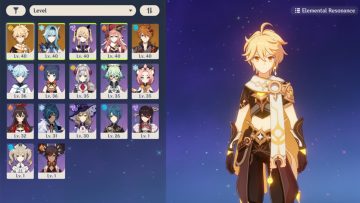
Gatcha games, are video games that implement the gacha machine mechanic. The term ‘gatcha’ comes from the Japanese onomatopoeia for the sound a capsule toy machine makes. In gatcha games, players spend in-game currency to “pull” a reward, often in the form of collectable characters, cards, or other items. Although in-game currency can generally be gained from game play, gatcha games have been criticized for being especially addictive as players are incentivized to spend real-world money to have a chance at pulling their desired reward.

As the results can never be guaranteed in its roulette-like mechanism, gatcha games are essentially games of luck, and players have found that the odds are usually stacked against them. After all, the more premium the character or item, usually the less chance there is for one to successfully pull it. In fact, it is precisely the rarity of an item that makes it so dearly sought after. Moreover, although most players say that they did not intend on spending money on the game when they first starting playing, they soon came to realize that it was hard to get the ‘good’ rewards without spending actual money.

Despite its foreign sounding name, the gacha game model is actually a worldwide phenomenon, and we can find this kind of gaming medium in western games as well. For instance, FIFA Ultimate Team has a game mode which allows players to purchase packs that include random selections of players and collectibles. Meanwhile in 2022, the action role-playing game Genshin Impact has approximately 50 million players playing the game — on a monthly basis. The game is so popular that it is now hosting its own conventions on a tour, in various nations around the world, with five conventions happening in just US alone in their 2022 tour.

One of the biggest debates surrounding gatcha games right now is whether they constitute a form of virtual gambling. Proponents of this theory argue that the use of artificial currency makes the transactions feel less real, therefore encouraging players to spend more than they would using real money. Opponents of this theory argue that the purchase of virtual currency cannot be considered a random outcome, because the players are getting exactly the same amount of virtual currency they are paying for. From a legal perspective, the players are rightfully getting a known quantity of virtual currency as “consideration” for their money. Moreover, some developers and players have contended that they are not paying for the gatcha roll itself, but merely the service provided by gatcha games with their joyous light and sound effects, which contributes to their gameplay enjoyment.

What is your take on the debate, and do you have any personal experiences with gatcha games yourself?


Sources:

https://thewokesalaryman.com/2022/07/26/what-being-addicted-to-gacha-games-taught-me/

https://www.casino.org/blog/gacha-games-gambling/

https://activeplayer.io/genshin-impact/

Video games could trigger life-threatening cardiac arrhythmias in children with undiagnosed heart conditions

A study has found that video games can trigger heart attacks in children with arrhythmic conditions. Head researcher Claire M. Lawley said, “Video games may represent a serious risk to some children with arrhythmic conditions; they might be lethal in patients with predisposing, but often previously unrecognised arrhythmic conditions.”

Researchers studied 22 cases of children losing consciousness while playing video games and found that multiplayer war gaming was the most common game played at the time of the incident. In some cases, the children died following a heart attack. The researchers believed that the dormant underlying heart condition is triggered by the rush of adrenaline children get from gameplay. These undiagnosed heart issues have previously been linked to sudden deaths of people playing sports.

I think this a really important discovery. As the researchers comment, video gaming was thought to be an alternative “safe activity” for children with heart conditions. However, with this proven linkage between video gaming and the triggering of heart conditions, parents have to be more vigilant, especially if children experience blackouts when playing video games.


Sources:

https://www.news-medical.net/news/20221011/Video-games-may-trigger-life-threatening-cardiac-arrhythmias-in-susceptible-children.aspx#:~:text=Electronic%20gaming%20can%20precipitate%20life,Society%2C%20and%20the%20Pediatric%20%26%20Congenital

https://www.telegraph.co.uk/news/2022/10/11/video-games-could-trigger-heart-attacks-children/

Nvidia’s 40 Series GPUs and NBA 2k: Is Gaming becoming too expensive?

Two years ago was a strange time. We were in a pandemic, I started my first year of law school and Nvidia had just announced their new 30 series graphics cards of which I had the fortunate success of purchasing before the price increase, the supply shortage, and the crypto-mining surge. Nvidia is set to release their 40 series cards soon, however, according to PCWorld the cheapest of the new graphics cards will have a $200 mark up over their predecessor, and quite possibly even more of a price increase (see: https://www.pcworld.com/article/1074935/nvidias-tone-deaf-pricing-is-a-golden-opportunity-for-amd-and-intel.html). Yes, there are more inexpensive ways to game. I don’t want to suggest we need high-end hardware to enjoy a video game. I simply bring up the Nvidia story to address something we have yet to in class, that is, accessing video games, in other words, what systems, disks, digital files, etc. we require to game.

I don’t have the raw data on hand, however, I can surely tell you that it “feels” as if gaming has become more expensive. Is this really the case? Bloomberg writes that the “60$ video game dates back” to the 90s (see: https://www.bloomberg.com/news/articles/2020-11-09/game-prices-go-up-to-70-the-first-increase-in-15-years). However, in 2020 publishers for the first time in 15-years increased the price of video games to $70 using inflation as their justification (https://www.bloomberg.com/news/articles/2020-11-09/game-prices-go-up-to-70-the-first-increase-in-15-years).

(image from: https://sea.ign.com/nba-2k23-next-gen-version/190180/review/nba-2k23-review-in-progress)

Games can be expensive and have clearly gotten pricier. But what I mean by too expensive is not related to price of access necessarily, but price to play. I was talking to another classmate in Video Game law and they agree, a lot of new games implement grind elements that are just too time intensive. For example, NBA 2k for the past few years have made it where an aspect of the game, MyPlayer, and its online counterpart, MyPark, rely on time spent playing. To make your player competitive you have to play through the game to earn in-game currency (VC- VC isn’t rewarded well through sheer time alone). This currency is then used to upgrade attributes of your player. However, you can almost bypass the initial grind and simply buy VC with real dollars. In effect, many players are paying roughly 60-70$ on top of the game’s purchase price to make that aspect of the game enjoyable (MyPlayer/Park are also the most popular game modes). Although you can grind your character, this is almost a non-option for those who don’t have the time. As a result, myself and many of my friends have given up on the game.

2K isn’t the only preparator of making games “too expensive” but it has set a precedent. What does this mean for the busy gamer, should we simply move on? It seems as if game hardware (e.g. game consoles, PCs) and games themselves are getting increasingly expensive, do you agree?



Blizzard’s Phone Number Requirement

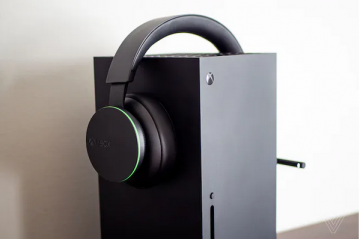
I came across a news article a few days ago regarding Overwatch 2 that seemed somewhat odd. According to Kotaku “every single Overwatch 2 player, including those who had previously purchased Overwatch, need to provide a phone number that fits certain requirements [numbers cannot be attached to a prepaid phone plan, landline, or use VOIP] in order to start the game (see: https://kotaku.com/overwatch-2-phone-requirement-fps-blizzard-cricket-mint-1849620021). The developer posits that this is to prevent cheating and abusive behaviour in the game, however, many players have argued that this new requirement may disadvantage players who don’t have access to phones, at least phones that meet Blizzard’s requirements.  Looking further into the issue I found out that the new Call of Duty will also adopt Blizzard’s phone requirement. CNET states that the “phone number verification system is part of the company’s defense matrix, aimed at improving security in-game and helping deal with disruptive players” (see: https://www.cnet.com/tech/gaming/call-of-duty-modern-warfare-joins-overwatch-2-in-requiring-phone-number-verification/).

(photo from: https://kotaku.com/overwatch-2-phone-requirement-fps-blizzard-cricket-mint-1849620021)

I agree with implementing security measures to protect end-users, however, Blizzard’s choice to limit phone numbers to those effectively linked to a data contract is somewhat bizarre. Are there not any alternative options that can be made available to players such as a device 2FA (two-factor authentication)? Do players now have to consider what kind of phone plan they have before purchasing a game? This seems like an unnecessary hurdle with respect to game accessibility. I think Gamespot captures it best: “restricting VOIP and prepaid numbers might stop hackers from worming their way back into the system, but it also has the unfortunate side effect of blocking people who rely on such services from playing the game entirely. Given that Overwatch 2 is supposedly a free-to-play game, this would seem contrary to the company’s intentions. Additionally, given that prepaid phones are often cheaper than their competition, this policy definitely hits poor and underprivileged people the hardest, as well as kids who are too young to own their own phones” (see: https://www.gamespot.com/articles/call-of-duty-modern-warfare-2-will-require-phone-number-verification/1100-6508136/).