Posts

Regulatory unbundling coverage @CBC

During our discussion with Sheridan Scott this week, it occurred to me that it might be useful in some way to po st the following clip. Perhaps most appropriate to post in in News of the Week (since it actually made the news last week). The clips broach the issue of consumer choice  in two ways that may be relevant to the course: 1. References to you as students and how you relate to entertainment services (as these subjects have come up in this year’s and past year’s Video Game Law course); & 2. the uniqueness of our totally individual footprint of digital entertainment choices which exists in gaming and the web, but not so much elsewhere. Embedded video and  link to the fuller story below.

Thoughts?

http://www.cbc.ca/news/canada/british-columbia/plan-to-unbundle-tv-channels-sought-by-feds-1.2426874

jon

News of the Week; November 20, 2013

1.  Judge Certifies Athlete Class Suing the NCAA

2. Right-Of-Publicity Claims And Their Impact On The Gaming Industry

3. PS4 Beating Out Xbox One in ‘Purchase Intent’

4. PS4 defects are isolated incidents, says Sony

5. Someone In The Vatican Pirated ‘Football Manager 2013’ Creator Alleges

6. Tropes vs Women in Video Games: Ms. Male Character

7. EA, Sony Execs Say Nice Things About Used Games

8. Timothy Leary Plans a Neuromancer Video Game, with Art by Keith Haring, Music by Devo & Cameos by David Byrne

9. Papers, Please: A Video Game With No Shootouts or Theft—Only the Banality of Evil

10. Major Research Finds No Correlation Between Video Games and Behavioral Problems

11. No dice: Supreme Court declares Alberta privacy law unconstitutional in Palace Casino case

12. Manitobans get new privacy law, but no one to complain to

13. Judge Sides With Google on Book Scanning Suit

+ US Dist. Ct. Opinion

14. WikiLeaks publishes secret draft of Trans-Pacific Partnership treaty

+ Link to Draft of IP Chapter

15. EFF and Other Groups to NSA: Are You Spying on Our TPP Work?

16. Google Employees Speak Out About Government Spying

17. Law Professors Call for Public Process for Trans Pacific Partnership (TPP) Intellectual Property Chapter

18. LG Smart TV Caught Collecting Data On Files Stored On Connected USB Drives

19. Hacker Receives 10-Year Sentence for ‘Causing Mayhem’

20. Organization for Transformative Works submits comments on remix to PTO/NTIA

21. Online Retailer Says If You Give It A Negative Review It Can Fine You $3,500

22. Regulators See Value in Bitcoin, and Investors Hasten to Agree

+ Federal Reserve: While bitcoins hold “promise,” we have no regulatory authority

And in the “in case teens needed another reason to quit Facebook as lame” category:

Facebook Reasserts Posts Can Be Used to Advertise

jon

Red Cross & simulated war crime poll question

From todays class, the slide with poll question following. Feel free to any additional thoughts by posting a reply…

Screen Shot 2013-11-20 at 1.36.09 PM

What's your take on the Red Cross saying that "Gamers committing war crimes should suffer virtual consequences" ?

View Results

Loading ... Loading ...

jon

Video Game talk on StarTalk

I just listened to this great talk on StarTalk about video games. It’s a little older, but still really relevant and touched upon many of the things we discuss in class:

http://www.youtube.com/watch?v=jNTH2JqrdfA

Week 10 – 11/13/13: “Mass Effect-s” & Dr. Kimberly Voll

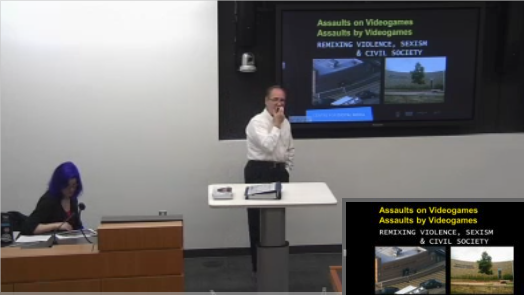
Fascinating, provocative and challenging class covering violence and sexism in games, as well as sexism in the games industry.

Screen Shot 2013-11-18 at 5.34.45 PM


Screen Shot 2013-11-17 at 3.40.38 PM

jon

Week 11 Guest Speaker – Sheridan Scott

scott_sheridan

Joining us this week will be Sheridan Scott who I have had the privilege of knowing from more years then either of us care to reflect on, dating back to appearing before Sheridan when she was CRTC counsel. Sheridan grew up in Vancouver moving to Toronto when she was in High School, then on to Montreal and Ottawa before returning to B.C. to do her law degree at UVIC.  Sheridan will be speaking on the nexus points of politics, policy & law as applied to some current issues relevant to video-games.

Sheridan is a Partner with Bennett Jones and is in the firm’s Ottawa office. From the Bennett Jones website:

“Sheridan Scott is co-chair of the firm’s competition and antitrust practice. She assists clients in competition matters within Canada and with competition-related public policy initiatives. She also advises clients on communications law matters.

Sheridan was Canada’s Commissioner of Competition from 2004 to 2009. As the head of the Competition Bureau, she administered and enforced the Competition Act and oversaw the development of comprehensive amendments to the Act that were passed in 2009. Internationally, Sheridan led the Bureau’s participation at the International Competition Network and the Organization for Economic Cooperation and Development, among others. She was elected chair of the ICN Steering Group, assuming leadership in early 2007.

In 2008, Sheridan received a special recognition award from the Canadian New Media Awards for her contributions to the new media industry. In 2005, she was named one of Canada’s 100 Most Powerful Women by the Women’s Executive Network and was honored with the Distinguished Alumni Award from the University of Victoria.

Prior to her appointment with the Competition Bureau, Sheridan was Chief Regulatory Officer of Bell Canada, where she was responsible for overseeing all activities involving the Canadian Radio-television and Telecommunications Commission (CRTC), the Copyright Board and the Competition Bureau on behalf of Bell Canada, Bell Mobility and Bell ExpressVu. Sheridan previously held senior positions with the CBC and the CRTC. She clerked under Chief Justice Bora Laskin at the Supreme Court of Canada on the completion of her law degree.

In addition to her practice, she is a member of the Editorial Board of Competition Law International, the International Bar Association’s journal dedicated to antitrust law and policy. She is also vice-chair of the International Committee of the American Bar Association’s Section of Antitrust Law.

Within the community, Sheridan is involved in a number of organizations, such as Opera Lyra Ottawa and the Leadership Giving Committee of the United Way. In 2009, she was elected an Honorary Member of the Media Awareness Network, a non-profit organization that develops and promotes media and digital literacy programs. In 2012, Sheridan was awarded the Queen Elizabeth II Diamond Jubilee Medal.”

jon

Increasing Inclusivity in the Video Game Community 8bits at a Time

41226160830e3c5e606368f5d093bfe0_large

With the discussion last week turning to the controversy surrounding misogynistic, and at times also homophobic, transphobic, and racist, elements in the video game community, I became curious as to alternative user-oriented game conventions designed to address such issues.

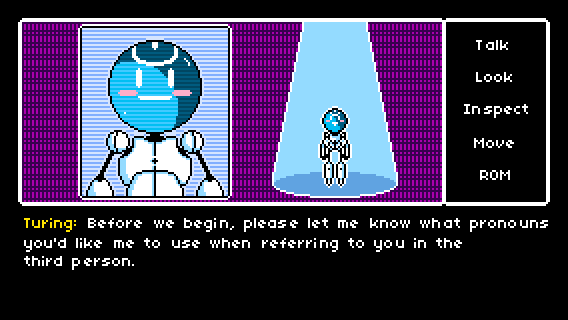
GaymerX, previously GaymerCon, was a convention organized with the idea of creating a safe space for queer gamers, though now the group has added to its mandate. GaymerX is beginning to develop its first 8bit game, Read Only Memories, and has included information on the game and the reasoning behind it as part of a kickstarter campaign: Kickstarter page for GaymerX’s Read Only Memories

The game contains queer characters as readily as straight characters, but also creates an inclusive environment for the player by asking how they would like their gender to be identified. This not only welcomes female gamers to play the game, but extends an invitation to genderqueer, trans*, or alternatively gendered individuals to do so as well.

While not comparable to highly marketed console based games in terms of audience, as creation of games becomes within the grasp of a growing number of users, it is not surprising that these creator/users would band together to make the kinds of games they want to play. The democratization of video game design can be extended beyond simply obtaining the creative tools to create a game since, as the kickstarter campaign illustrates, users can also be the source of up-front funding. The question then becomes, how much can users shape the industry as a whole through support for projects such as Read Only Memories? Will the 45% of gamers who are female support projects with inclusion of female characters? Will gamers as a whole expect the diversity seen in the physical world to be reflected in the digital world? Or will small-scale independent games be unable to make any real difference when faced with Goliath-like industry leaders crafting console games for an ever-consuming audience?

The Easy Difficulty Setting

In class today, on the topic of sexism in videogames, Jon closed with an anecdote about navigating his way out a building with heavy, cumbersome boxes. The unforeseen obstructions that littered his path made what should have been an easy trip into a complicated affair; one that needed to be travelled carefully and with planning.

This reminded me of a great article by science-fiction author John Scalzi: “Straight White Male: The Lowest Difficulty Setting There Is”.

In the article, Scalzi associates the navigation of life in our society with difficulty settings in a video game. In the video game known as the “Real World”, Straight White Male is the lowest difficulty setting there is. As he puts it, on this setting:

“The default barriers for completions of quests are lower. Your leveling-up thresholds come more quickly. You automatically gain entry to some parts of the map that others have to work for. The game is easier to play, automatically, and when you need help, by default it’s easier to get.”

At the beginning of the “Real World”, you get a randomly generated selection of points to attribute to your character (such as in a game like Skyrim). These points may represent the wealth of the family you were born into, or just natural ability. While playing on the lowest difficulty setting, a straight white male (STM) may start the game with very few points. The STM may therefore struggle to progress in the game as fast as some other players playing on a higher difficulty setting, but who began the game with more points.

No matter what though, the game is still easier on the lowest difficulty setting.

After posting this article, Scalzi encountered pushback. Many readers were upset with the notion. Some, apparently, declared that they would never write anything he wrote again.

In a follow-up post, Scalzi recounted some of the arguments he received in opposition to his thesis. It seems that many readers were quite defensive at the notion that they had been playing on “easy” all along.

I’m sure the science-fiction fans that make up much of Scalzi’s readers largely overlap with those videogame fans and creators that bristle at the notion that sexism may still be embedded within their community. As we discussed today, addressing these topics can put those who identify with a culture on the defensive. But addressing these topics is how we move forward.

News of the Week; November 13, 2013

1. Huge Xbox losses hidden by patent royalties, says analyst

2. PSN: We Reserve the Right to Monitor and Record Your PSN Activity

3. 9 Ways Video Games Can Actually Be Good For You

4. Witness Blames Malicious Act on Oakland Public Bus on Video Games

5. XBox, Watch TV: Inside Microsoft’s Audacious Plan to Take Over the Living Room

6. The Massive Nintendo Paradigm Shift

7. $800 Minecraft Bill Leads to Felony Filing Against Ten-Year-Old

8. Xbox One and PS4 “too limited” for Oculus Rift creator

9. Helsinki: Picking the Right Acorns

10. Police need judge’s specific permission to search computers, Supreme Court rules

11. Judge rules that peer-to-peer file-sharing data isn’t private

12. WikiLeaks publishes secret draft of Trans-Pacific Partnership treaty

13. In Viacom v. YouTube appeal, law profs duel over copyright cop duties

14. Some thoughts on Chitrakar v. Bell TV and damage awards under Canadian privacy law

15. C.I.A. Is Said to Pay AT&T for Call Data

16. Google Is Ordered to Block Images in Privacy Case

17. User Generated Content Copyright Law Symposium Videos  (Osgoode IP & Technology Program, October 10, 2013)

jon

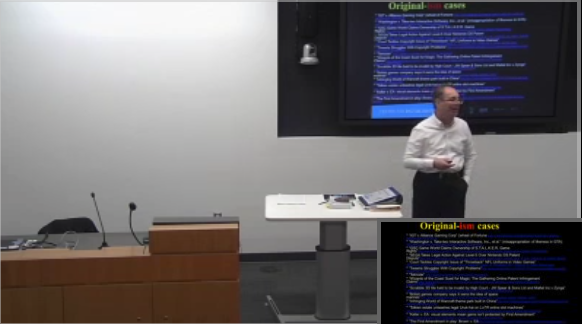
Week 9 – 11/6/13: “Controlling Originality” & Andy Moore

It’s all here. Sorry for system mandated video cut off at the end. And for the fact that the way we connected Andy’s slides into the system through a secondary didn’t allow the video system to pick them up so you will have to download them and advance manually.

Screen Shot 2013-11-17 at 1.25.43 PM


Screen Shot 2013-11-12 at 9.29.46 AM

Screen Shot 2013-11-17 at 2.05.27 PM

jon